Most advice about retail event marketing starts with the wrong question: how do we create more buzz? A crowded store, a photogenic installation, and a long line may look successful, but none proves that shoppers chose the product, added it to their basket, or returned later.
The better question is: what uncertainty can this event remove at the shelf? Today’s shopper may have researched a beverage, skincare product, spirit, or household item online before entering the store. They may have compared prices, read reviews, checked retailer availability, or used GenAI to narrow the options. The live event has to help them finish the decision, not just interrupt the shopping trip.
That shift changes everything, from format and staffing to offer design and measurement. A strong activation gives shoppers a reason to stop, a simple way to understand the product, and a clear next step toward purchase. It also connects pre-event discovery and post-event follow-up to what happens in the aisle.
Why Retail Events Are More Than Brand Theater
Retail events are often judged by their visible output. Did people attend? Did they take photos? Did the space feel energetic? Those signals matter only when they support a commercial outcome. Attendance is an opportunity, not a result.
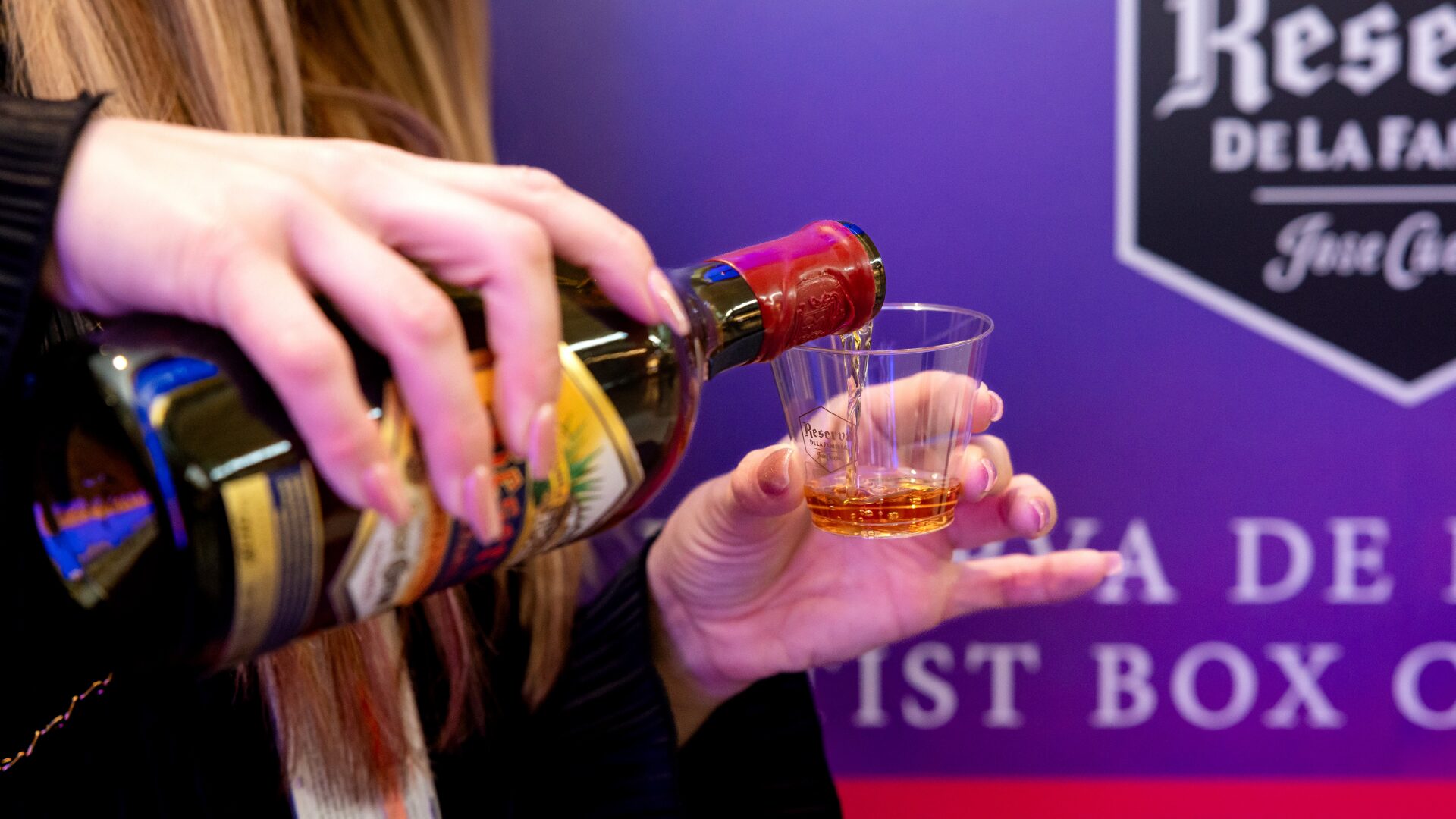
The shopper arriving at a tasting table may already know the brand. They might be choosing between two flavors, evaluating whether a premium price is justified, or waiting for a promotion before committing. A brand ambassador who repeats a product slogan adds little value. An ambassador who explains the flavor profile, answers a usage question, and makes the offer easy to redeem can remove the friction holding up the purchase.
Shopping journeys now move in both directions. Research found that 73% of shoppers researched online before buying in-store, while 54% researched in-store before buying online (Agility PR’s retail event analysis). A retail activation therefore sits inside a broader decision system. The shopper may discover the product on a retailer site, validate it through a live sample, and complete the purchase in-store. Or they may experience it in person, then buy online later.
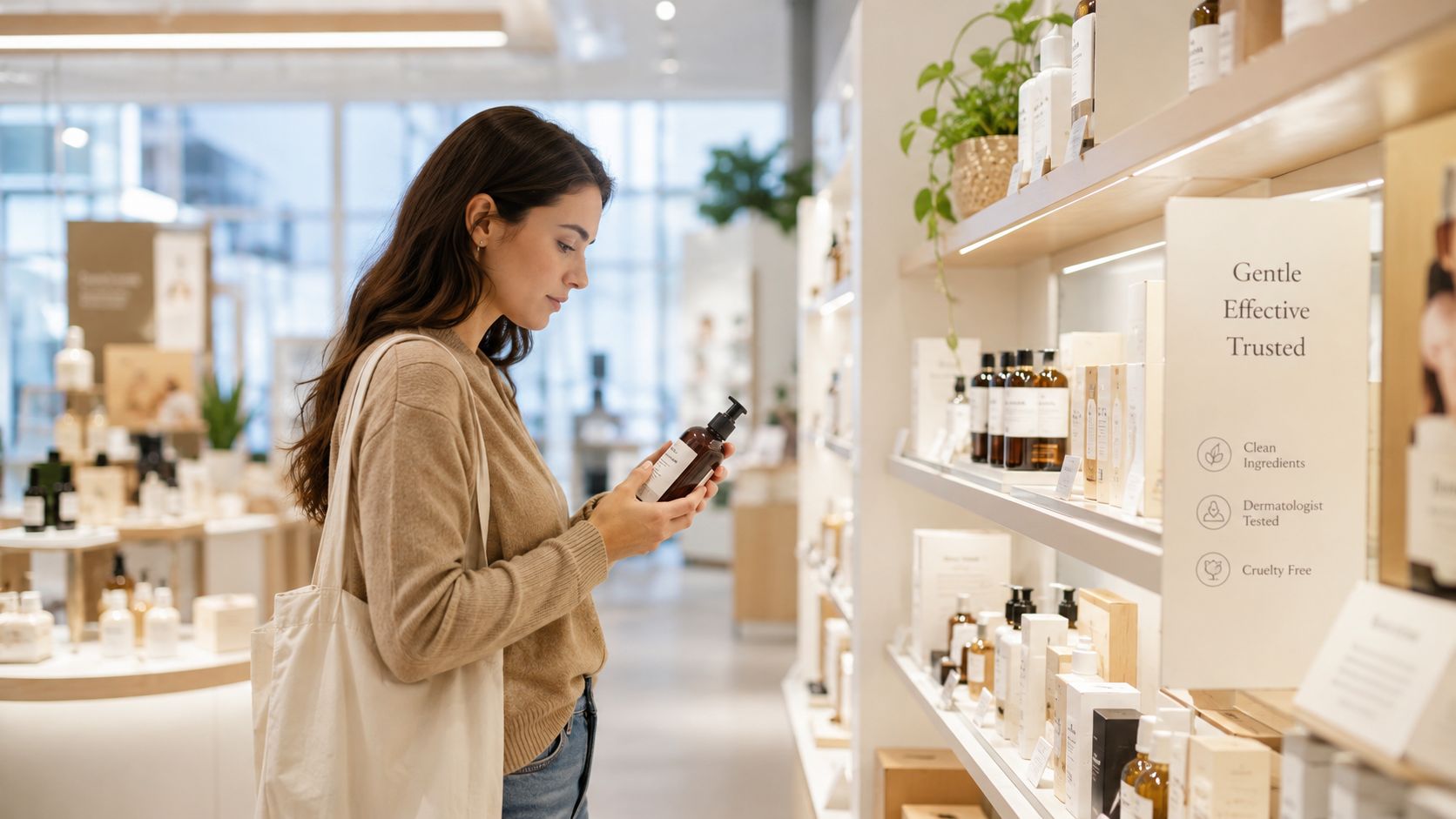
Design for confidence, not spectacle
The most useful activation answers practical questions quickly:
- What is it? Make the product benefit immediately understandable.
- Why this option? Give shoppers a credible distinction they can remember.
- How do I use it? Demonstrate the occasion, serve, recipe, or routine.
- What should I do now? Connect the interaction to a shelf location, offer, or digital purchase path.
Personalization helps, but it doesn’t require an elaborate technology layer. A beverage event might ask whether a shopper prefers a lighter, sweeter, or more complex profile, then guide them to the relevant product. A CPG demo might focus on the shopper’s meal occasion rather than presenting every product feature. Relevance reduces cognitive load.
Low-friction execution matters just as much. Long registration forms, unclear sampling rules, difficult coupon redemption, and staff who can’t explain the offer turn interest into abandonment. The experience should feel like useful assistance embedded in shopping, not another task imposed on a time-poor customer.
Practical rule: If the event creates excitement but leaves the shopper unsure what to buy, it has produced attention without resolving the decision.
The Strategic Foundations of Retail Event Marketing
Retail events should reduce hesitation at the shelf, not simply create a branded spectacle. In-store sampling has long been associated with product trial and purchase behavior. Research cited by Progressive Grocer found that 86% of surveyed consumers said they would purchase products they sampled in stores, while 90% of retail executives believed in-store sampling influences consumer spending and satisfaction. Both figures are reported in Progressive Grocer’s coverage of the Mass Connections study. The same research estimated that in-store sampling could generate about $5.5 million in total daily product sales nationwide, reinforcing the difference between an event that supports conversion and one that only generates awareness.
Academic research adds a behavioral dimension. In-store events can increase perceived shopping value and intentions to shop, affecting both the immediate transaction and the shopper’s evaluation of the store visit. For CPG and beverage marketers, participation design therefore matters. The brand is shaping how easy, worthwhile, and credible the purchase feels, especially for shoppers who have already researched online and need confidence at the point of choice.
The shopper journey is cross-channel
Retail event marketing performs better when the activation connects with the touchpoints around it. Pre-event retailer media, search visibility, email, social content, and store signage can establish the product before shoppers reach the activation. During the event, staff and displays should reinforce that message. Afterward, a receipt offer, loyalty prompt, retailer-app reminder, or retargeting sequence can support a purchase that does not happen immediately.
The attendance gap is significant. 68% of shoppers said they would attend hosted retailer events, but only 23.5% had ever been invited to one, according to Agility PR’s analysis. Low attendance may reflect weak invitations, inconvenient timing, poor placement, or an unclear event proposition rather than limited consumer interest.
Earlier EventTrack findings reported that 52% of consumers purchased the product or service they saw at a recent event, 54% bought it later after the event, and 88% of those who bought once became regular customers. These figures, also discussed in the Agility PR analysis cited above, point to a measurement challenge. A shopper who leaves without buying may still have commercial value, but the brand needs a way to identify and support that delayed journey.
Evidence to anchor the plan
| Metric | Value |
|---|---|
| Consumers willing to purchase sampled products in-store | 86% (Progressive Grocer) |
| Retail executives who believe sampling influences spending and satisfaction | 90% (Progressive Grocer) |
| Shoppers researching online before buying in-store | 73% (Agility PR) |
| Shoppers researching in-store before buying online | 54% |
| Shoppers willing to attend hosted retailer events | 68% |
The strategic implication is direct: build the event around trial, proof, and purchase completion. A sampling station without shelf navigation wastes intent. A demonstration without an offer or availability cue may create interest that another brand captures later. Stronger commercial value comes from assigning every interaction a role in the shopper’s decision path, then measuring incremental conversion and basket lift rather than attendance alone.
Designing Events That Reduce Decision Friction
A retail event earns its space by helping a shopper decide. Before selecting a venue, backdrop, or staffing model, identify the uncertainty blocking the next action. The barrier may involve taste, usage, quality, price, or choosing among variants. Each one requires a different intervention.
Step one, define the friction
Write the hesitation in the shopper’s own terms. “I don’t know which flavor to choose” points to guided sampling with a clear comparison. “I don’t understand how to use this product” requires a demonstration tied to a familiar occasion. “I like it, but I’ll wait for a deal” calls for visible offer terms and a redemption route that works at the shelf or in the retailer app.
Set one primary action for the event. That may be a purchase, a multi-item basket, a coupon redemption, a loyalty sign-up, or a product-page visit. Secondary actions can support it, but competing requests turn shopping assistance into lead capture.
The in-store marketing strategy guide helps teams connect the activation with merchandising, shopper messaging, and the surrounding retail environment. The event should function as part of the store journey, not as an isolated branded island.
Step two, match format to shopper behavior
Match the format to the decision being made. A short tasting beside the relevant shelf can resolve a trial barrier more efficiently than a large branded footprint. A hands-on workshop fits a product that needs explanation. A small guided gathering supports deeper conversation with a defined audience, while a high-traffic pop-up gives a new proposition broader exposure.
Keep the experience short enough to respect shopping missions. Research on Singapore mall events found that larger event spaces, shorter durations, and tenant-promoting mechanics were the strongest sales drivers, while higher event frequency was associated with better tenant sales performance (National University of Singapore’s mall event study). The practical implication is to design for visibility, concise interaction, repeatability, and a clear route to the tenant’s products. Scale alone does not resolve decision friction.
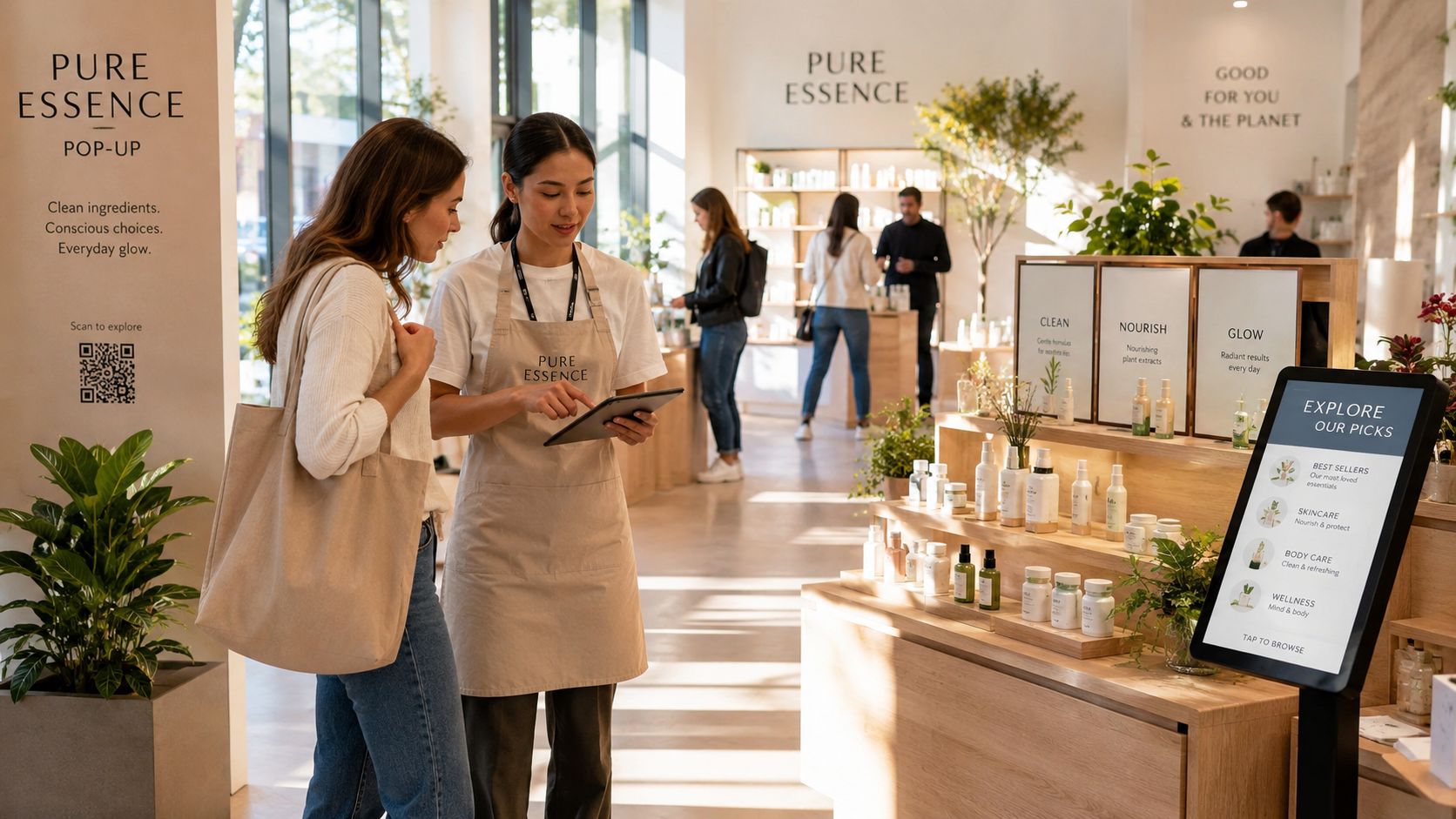
Step three, remove operational obstacles
Build the path from interaction to transaction before launch:
- Place the product nearby. Shoppers should not have to search the store after sampling.
- Make the offer legible. State qualifying products, redemption method, and end date without burying the conditions.
- Use digital support selectively. A tablet can show recipes, comparisons, stock information, or retailer-app instructions. It should support a helpful human conversation, not replace one.
- Prepare a fast fallback. Staff need responses for low stock, technical failure, unavailable variants, and shoppers who decline registration.
- Brief the team on objections. Give ambassadors concise answers about price, ingredients, preparation, flavor, and product differences.
Measure whether the event changes behavior. Compare exposed shoppers with a suitable store or time-period baseline, then track incremental conversion and basket lift. Attendance indicates reach. The stronger test is whether the experience helps more shoppers buy, choose an additional item, or complete the intended action.
The strongest event feels easy because the planning team has removed obstacles in advance. It gives shoppers enough evidence to choose confidently, then clears the path to purchase.
Creative Concepts That Resonate with Modern Shoppers
Creative earns its place when it shortens the distance between shopper interest and a confident choice. Digitally assisted shoppers may arrive with a shortlist, reviews, or a product comparison already in mind. The activation should resolve the remaining question quickly, then make the selected product easy to find.
A beverage launch can become a tasting lesson. The ambassador presents a small range of serves, explains the practical difference between them, and asks which occasion matters most. The shopper receives a relevant recommendation and finds the corresponding product beside the activation. The concept and conversion path reinforce each other.
For a CPG brand, an interactive meal or usage demonstration can address uncertainty about fit. Show how the product works in a familiar occasion, then give shoppers a concise takeaway they can use at home. Linking the demonstrated product with complementary items may increase basket size, provided the display remains easy to shop and the recommendation feels relevant.
Build concepts around shopper jobs
Strong concepts usually perform one of four jobs:
- Reduce selection anxiety. Use guided comparisons, taste profiles, or simple decision trees.
- Prove the product benefit. Demonstrate performance in a way shoppers can see or experience.
- Make the occasion tangible. Show when, where, and with what the product belongs.
- Reward participation. Offer a useful incentive that supports purchase and keeps attention on the product.
Sampling works because it turns an abstract promise into firsthand evidence. Experimental retail-event research found that educational and entertaining events can improve shopper satisfaction through participation design, while active and passive participation can be treated as distinct operational segments (ScienceDirect’s research record). That distinction helps with staffing and invitation design. A browser needs a low-commitment entry point; a shopper ready for a demonstration can handle a more involved interaction.
Theory House’s brand activation examples provide a reference for turning a product truth into a physical interaction. The format can vary. The mechanic should make the product easier to understand, compare, or choose.
Use intimacy and personalization carefully
Smaller gatherings can create stronger conversations for spirits, premium beverages, and products with a learning curve. They also restrict reach and demand sharper audience selection. Broad pop-ups create visibility, yet they can stretch staff thin and produce shallow interactions when the product story requires explanation.
AI-enabled personalization can support recommendations, content selection, or retailer-app discovery. Use it when it helps a shopper reach a relevant product faster. Too many questions, a slow-loading screen, or an unclear data exchange adds decision friction. In those cases, a trained ambassador is often the more effective tool. Evaluate the concept by incremental conversion and basket lift, not participation alone.
Executing Flawless Retail Events
Retail event execution breaks down at handoffs. The creative agency designs the experience, the retailer controls the space, the vendor staffs it, and the brand team owns the commercial target. A shared operating plan must connect those responsibilities, or each group may deliver its own version of success while the shopper still leaves without the product.
Build one operating brief
Set the event objective, shopper barrier, assortment, approved claims, offer mechanics, staffing roles, site map, setup requirements, escalation contacts, and measurement plan in one brief. State what the event will not do. If the goal is conversion, do not let photo opportunities block the shelf or absorb budget that should support product discovery and purchase.
The timeline should run from retailer approval and site verification through production, staffing, training, inventory, technical testing, and post-event reporting. Walk the site before finalizing the design. Check power, storage, traffic flow, refrigeration, waste handling, accessibility, queue management, and the distance between the activation and the product.
Execution principle: Every visual element should earn its space by helping the shopper understand, experience, find, or buy the product.
Protect the commercial link
Event format and duration can affect whether an activation supports tenant sales or becomes entertainment detached from the products. Mall research has highlighted the risk of over-designed experiences that fail to promote participating tenants or direct shoppers to relevant products. Grocery and big-box events face the same problem. A polished footprint far from the shelf may attract interaction while losing the transaction.
Coordinate with store managers before production begins. Confirm inventory, replenishment ownership, point-of-sale placement, and the process for reporting stockouts. Staff should leave the activation when needed and guide shoppers to the product, rather than pointing vaguely toward an aisle.
Manage the day as a series of handoffs
Assign one owner to each operational checkpoint:
- Before opening: verify product, equipment, permits, uniforms, signage, offer materials, and staff readiness.
- During the event: monitor queue length, sample availability, shopper questions, and shelf conditions.
- At close: reconcile inventory, record redemptions, capture staff observations, remove assets safely, and preserve useful feedback.
- Afterward: compare results with the pre-event baseline and document changes for the next location.
Budget for transport, cold storage, cleaning, replacement materials, payment support, overtime, and retailer requirements. These details can decide whether the experience runs smoothly. A smaller concept delivered reliably usually beats a spectacular one that strains staff, disrupts the store, or leaves shoppers unsure where to buy.
Measuring What Matters in Retail Event Marketing
An event dashboard should show whether the activation reduced decision friction and changed the basket, not merely whether it attracted attention. Separate attention, participation, intent, and purchase. A shopper may pass the display, accept a sample, ask a question, or scan an offer without buying. Each action signals a different stage and needs its own field.
Track the decision sequence
Build the dashboard around the path from contact to conversion:
- Exposure: store traffic, event reach, and retailer-media delivery.
- Participation: passive browsing, active conversation, sample acceptance, demo completion, or workshop involvement.
- Intent: product preference, stated purchase consideration, retailer-page visit, or offer interaction.
- Redemption: coupon use, loyalty scan, QR interaction, or attributable promotion.
- Purchase: units sold, conversion, incremental sales, and product-level lift.
- Basket effect: average basket size, complementary-item attachment, and trade-up behavior.
- Lag: purchases during the event, after the event, and through connected online paths.
Intent is a useful checkpoint, not a revenue result. The ARF-cited experiential benchmark found that purchase intent rose from 11% to 52% after brand-sponsored events, with that intent translating into sales about 50% of the time. The practical question is how many shoppers moved from stated interest to redemption, then from redemption to purchase.
Establish an incremental view
Compare event locations or periods with a suitable baseline where possible. Control for promotions, holidays, distribution changes, retailer media, weather, and stock availability. A sales spike may come from a discount or seasonal demand rather than the event.
For basket lift, compare event shoppers with a relevant non-event basket, then identify complementary products purchased together. To measure purchase lag, connect the interaction with later transactions through loyalty data, unique offers, retailer reporting, or consented digital identifiers. Use the same method across locations so the team can separate a repeatable mechanic from a one-off result.
Set participation level as a segment variable. Active participants may need less explanation and a quicker route to purchase. Passive attendees may respond to a simple invitation, visual proof, or staff prompt. Those distinctions can guide staffing, sample volume, demonstration scripts, and queue design.
Theory House’s tentpole activation audit offers a planning reference for checking whether a major activation aligns with shopper behavior, retail execution, and measurable outcomes. End the dashboard with decisions. Keep mechanics that change purchase behavior, revise those that create intent without follow-through, and remove activity that produces attention without commercial value.
Future-Proofing Your Retail Event Strategy
Retail event marketing will remain durable because physical experience solves problems digital discovery can’t solve alone. A shopper can read a description online, but tasting a beverage, seeing a product demonstration, or receiving a personalized recommendation can turn uncertainty into confidence. The event earns its place when it helps the shopper make a better decision faster.
The strategy needs to adapt to a more deliberate purchasing journey. Recent evidence reported that nearly 60% of consumers plan to start researching deals in October or early November, 48% have used or plan to use GenAI in their shopping journey, and 77% sometimes or often delay purchases to wait for major sales (BCG’s analysis of changing year-end shopping behavior). For event teams, that means pre-event visibility, offer clarity, product availability, and post-event follow-up may matter as much as the live interaction.
Shopper stress also changes the design brief. A 2026 retail experience survey reported that 50% of Gen Z shoppers find in-store shopping stressful, while 72% of millennials say in-store experience quality influences where they shop (Retail Brew’s retail evolution coverage). Smaller, focused experiences, clear guidance, mobile-enabled redemption, and retailer-app integration can serve shoppers better than generic spectacle.
Build a repeatable system:
- Use data responsibly to tailor recommendations and follow-up.
- Keep formats modular so teams can adapt them across stores.
- Connect every event to retail media and search before shoppers arrive.
- Measure delayed conversion instead of treating the event date as the end of the journey.
- Train ambassadors as decision guides, not just entertainers.
The future belongs to events that make shopping easier. Design for confidence, connect the experience to the shelf, and judge success by incremental conversion, basket lift, and retained behavior.
Theory House helps food, beverage, and CPG brands connect shopper strategy, creative, retail design, and activation into programs built to move the product at shelf. Visit Theory House to discuss an event system that reduces decision friction and measures what happens after the crowd leaves.