Shoppers already expect packaging to do more than sit on shelf. In beverage, that matters because the package is often the last brand touchpoint before purchase and the first touchpoint after it lands in the cart.
Augmented reality drinks deserve attention for a simple reason. AR can turn packaging, menus, and in-store prompts into working shopper media that builds consideration, supports conversion, and extends the brand experience after purchase. Used well, it does not sit apart from your retail strategy. It strengthens it.
We advise brands to treat AR as part of a broader packaging and shopper marketing system, not a one-off activation. A can or bottle can help explain flavor, provenance, usage occasion, or cocktail ideas. A menu or display can reinforce trial. A post-purchase scan can drive loyalty, data capture, or repeat purchase. That is the core business case. AR gives the package more jobs to do across the path to purchase.
This approach aligns with a broader shift toward packaging as an experience in beverage marketing. The trade-off is discipline. More interactivity does not automatically mean more sales. If the experience is slow, irrelevant, or disconnected from retail execution, shoppers drop off fast and the activation becomes expensive theater.
The brands getting value from AR are the ones using it to solve specific commercial problems: educate at shelf, differentiate in a crowded set, support premium pricing, improve on-premise engagement, or create a stronger bridge from physical product to digital commerce. That is the lens that matters.
What Are Augmented Reality Drinks
Shoppers make beverage decisions in seconds, often with limited information and too many similar choices on shelf. Augmented reality drinks give brands a way to add decision support, brand storytelling, and post-purchase utility to the physical product without asking the shopper to leave the moment.
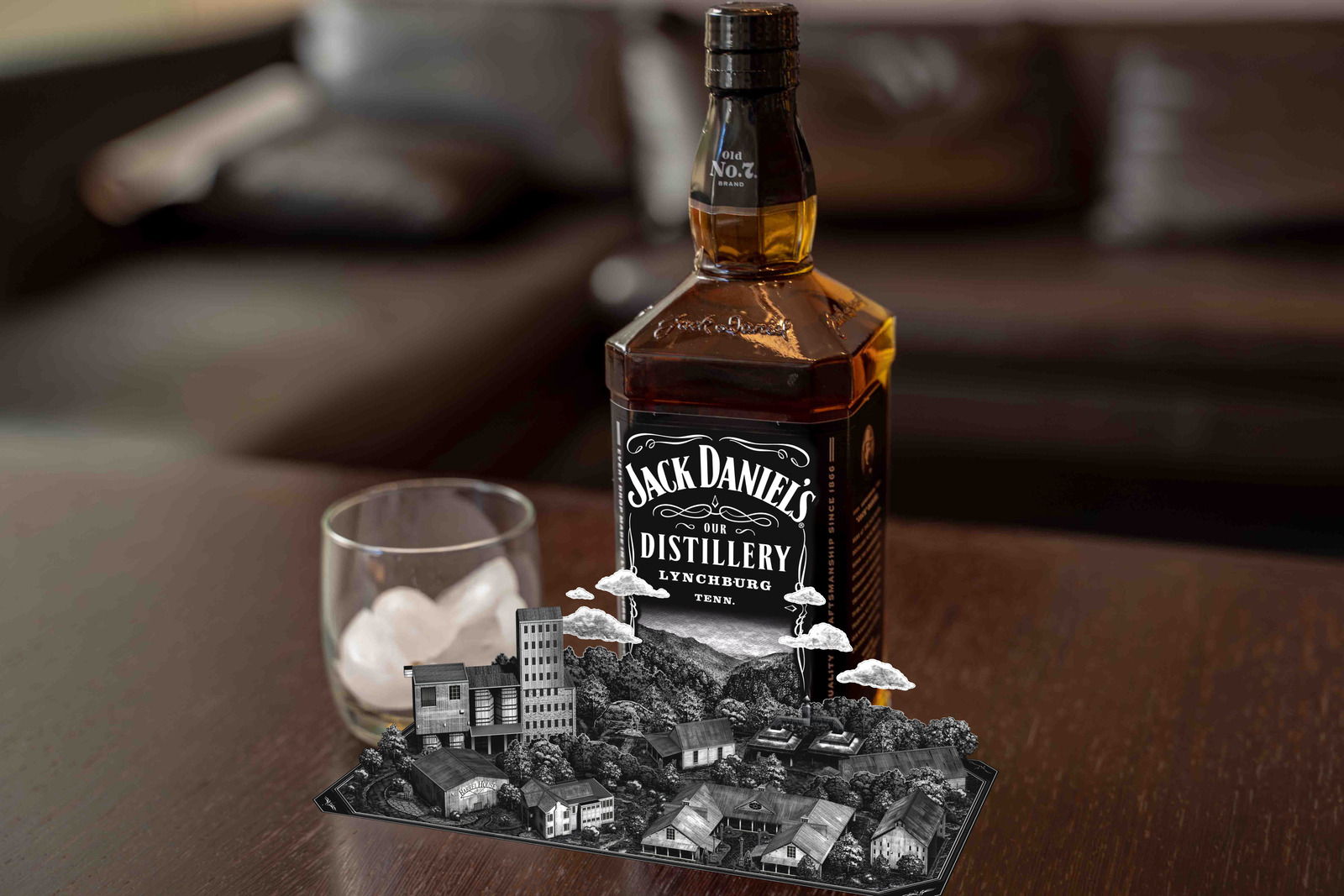
Augmented reality drinks are beverage products and drinking occasions enhanced by digital content that appears when a shopper scans packaging, a coaster, a menu, or another brand touchpoint with a phone.
The experience can be simple or layered. A label might reveal tasting notes, ingredient sourcing, cocktail tutorials, food-pairing guidance, provenance, or a promotional experience tied to a limited release. In retail terms, AR turns packaging and nearby touchpoints into active shopper media. That matters because the bottle, can, or menu now does more than identify the brand. It helps sell it.
The drinks industry has been testing this for years. SevenFifty Daily has covered how beverage brands used AR across labels, coasters, and packaging to extend the product experience through mobile access. The important shift was not the novelty of the technology. It was the fact that a phone camera made AR easier to access at shelf, on premise, and at home.
Why this matters at retail
Beverage is a low-consideration category until it suddenly isn’t. A shopper may move quickly in convenience, but slow down in wine, spirits, functional drinks, or premium imports where more context can justify the choice.
AR helps when it closes a real information gap. A sparkling water brand can explain flavor cues or ingredient standards. A wine label can clarify region and pairing. A spirits bottle can show a serve that makes the purchase feel more usable tonight, not someday. A beer multipack can connect the product to a seasonal occasion, promotion, or fandom platform that strengthens conversion.
That is the standard we use with clients. If the experience does not help the shopper choose, understand, or use the product, it will struggle to justify the cost.
Packaging becomes a more productive asset
Packaging already carries the burden of branding, compliance, differentiation, and shelf impact. AR adds another job. It gives the pack a digital layer that can educate, persuade, and continue the brand experience after purchase.
That matters most when AR is planned as part of the broader package system, not as a standalone tech add-on. Brands that are already investing in packaging as an experience in beverage marketing are often better positioned to make AR work because the physical pack and digital layer are built to support the same commercial role.
The trade-off is straightforward. More interactivity does not automatically create more sales. Slow load times, weak content, poor shelf signage, and disconnected calls to action turn AR into expensive theater. Strong programs tie the scan to a clear shopper need and a measurable retail objective.
Four Ways to Use AR in Your Beverage Marketing
The most effective AR programs aren’t built around software features. They’re built around shopper behavior. Below are four practical plays that work across alcohol and non-alcohol categories.
Turn packaging into a living brand asset
For many brands, the label is the smartest place to start. Think of it as a mini-site built into the product itself. The shopper scans and immediately gets more context without searching, typing, or leaving the moment.
This works well when the product has a story worth unpacking. Wine can explain varietal and region. Spirits can show craft credentials or cocktail serves. Functional beverages can break down ingredients and usage occasions.
What works:
- Education tied to purchase decisions. Tasting notes, serve suggestions, and product differences help the shopper choose.
- Content matched to the product tier. Premium bottles support richer storytelling than value SKUs.
- A clear next action. Buy now, find nearby, save recipe, or explore the range.
What doesn’t:
- Generic animation with no selling role. If it only looks cool, most shoppers won’t come back.
- Overloaded interfaces. Too many taps kill momentum.
- Creative disconnected from the pack. The scan experience should feel native to the visual world of the bottle or can.
Build in-store moments that interrupt autopilot
In-store AR works best when it complements existing retail theater. Endcaps, display headers, shelf talkers, and cooler doors can all become triggers for mobile interaction. This isn’t about making the aisle feel futuristic. It’s about giving the shopper a reason to stop, engage, and understand.
A practical example is category education. If you’re launching a ready-to-drink cocktail line, AR can explain flavor, ABV positioning, and ideal occasions at the point of comparison. If you’re promoting a seasonal item, AR can add urgency and discovery.
For teams thinking through this broader retail lens, these in-store marketing tactics for CPG and retail brands help frame where AR belongs and where traditional signage still does the heavier lifting.
AR should earn its place in-store by making the fixture more useful, not more complicated.
Use social filters to expand brand participation
Social AR has a different job. It isn’t primarily about helping a shopper decode the shelf. It’s about extending identity, play, and participation around the brand.
This format fits launches, seasonal programs, cultural moments, sponsorships, and creator activations. A cocktail brand can turn signature serves into shareable effects. A flavored seltzer can build a playful flavor-selector filter. A hydration brand can create challenge mechanics that tie to routines or lifestyle.
The trade-off is that social AR can drive plenty of interaction without helping conversion if it’s too detached from the product. The strongest programs connect the social moment back to the pack, retailer, or occasion.
Elevate the on-premise drink experience
AR also works when the drink isn’t on a shelf at all. In bars, restaurants, tastings, and events, it can enrich the ritual around ordering and consumption.
SevenFifty Daily described an early example in which venues used the Mirage app so guests could scan cocktail coasters and see animated presentations of the drink. That’s a useful pattern because it shows where AR fits on-premise. It amplifies anticipation, gives staff an easier storytelling tool, and makes the drink more memorable without changing the liquid itself.
A concise way to think about the four uses:
| Use case | Best role | Strongest outcome |
|---|---|---|
| Packaging AR | Product education and storytelling | Better informed purchase |
| In-store AR | Shopper interruption and guidance | Stronger shelf engagement |
| Social AR | Participation and sharing | Broader brand affinity |
| On-premise AR | Occasion enhancement | More memorable experience |
Measuring the Business Value of AR Activations
Shoppers are more likely to buy when AR helps them understand a product, compare options, or picture the occasion. That upside is real, but it only matters if your team can connect the experience to retail performance.
AR should earn its place in the program the same way any other shopper tactic does. It needs a job. It might increase conversion on a new item, support trade-up into a premium tier, improve basket attachment with mixers or garnishes, or build repeat purchase through useful post-purchase content. If the activation is only measured by impressions, views, or social chatter, the business case stays weak.
The metrics that matter most
We advise brands to start with the retail objective and build the AR measurement plan backward from there. That keeps the experience tied to shopper behavior instead of treating it like a standalone piece of digital theater.
A practical scorecard usually includes:
- Scan rate by asset to show which pack, display, menu, or media placement drove entry
- Engagement depth to show whether shoppers consumed enough content to affect choice
- Click-through to commerce, coupon, or store locator to connect interest to a shopping action
- Repeat interaction to separate real utility from one-time curiosity
- Content pathing to show what shoppers wanted most, such as recipes, ingredients, sourcing, or pairings
These are the kinds of measures that belong inside a broader retail performance indicator framework, not in a separate dashboard no sales team uses.
What good measurement looks like
A sound AR KPI plan answers three questions.
- Did the right shopper enter the experience?
- Did that shopper take a meaningful action inside it?
- Did that action support the sales objective?
The answers should change based on the assignment. For trial, track scans that lead to sampling sign-up, coupon load, add-to-cart, or store locator visits. For premiumization, watch whether shoppers spend time with origin stories, tasting notes, craftsmanship content, or food pairing guidance. For loyalty, look for return visits, multi-SKU exploration, or interaction across occasions over time.
Many beverage teams either over-claim or under-measure. A high interaction rate can still be a weak result if the experience never moves the shopper closer to purchase. A modest scan rate can be a strong result if the people who enter are your highest-value buyers and they convert at a higher rate.
Measurement tip: Judge AR by what it changed in shopper understanding, product choice, or next action.
Where teams go wrong
The most common mistake is treating AR as a novelty layer added late in the process. That usually leads to vague goals, generic reporting, and no clear retail action.
We see stronger results when AR is planned as part of the full shopper journey. On pack, it can answer the last questions holding back purchase. In-store, it can reduce decision friction and drive trade-up. After purchase, it can extend usage with recipes, rituals, or occasion ideas that support repeat sales. The same creative platform can do different jobs at different touchpoints, but only if the measurement model reflects that broader role.
AR works best as a hybrid shelf, media, and CRM asset. If your reporting cannot show how it supported conversion, basket building, premium mix, or repeat purchase, the creative may still be impressive, but the program is not finished.
Choosing the Right AR Technology for Your Brand
For most beverage brands, the central technology decision isn’t complex. It’s practical. Should the consumer download an app, or should the experience run in the mobile browser?
In most retail environments, WebAR is the better choice. According to Omniaz on WebAR for beverages, web-based AR is the most practical deployment path for beverage brands because it runs in a mobile browser without requiring a separate app, lowering scan friction at shelf and reducing installation drop-off while preserving measurable digital attribution from previously analog packaging.
Why WebAR wins in beverage
Shelf decisions happen fast. The more steps you add, the more users you lose. Asking a shopper to download an app in an aisle, at a cooler, or in a bar usually creates too much friction.
WebAR removes that barrier. A shopper scans and lands directly in the experience. That makes it better suited to packaging, retail displays, ecommerce pages, social traffic, and paid media where you need continuity across touchpoints.
A few scenarios make this clear:
| Technology path | Shopper effort | Best fit |
|---|---|---|
| WebAR | Low | Packaging, displays, media, ecommerce |
| App-based AR | Higher | Ongoing ecosystems with repeat utility |
If your brand already has a heavily used loyalty or lifestyle app, app-based AR can make sense inside that ecosystem. But that’s a narrower use case. Most beverage brands don’t need another app. They need less friction between curiosity and action.
What to ask a technology partner
The platform matters, but the operating model matters more. Beverage teams should push vendors on the basics that affect launch quality and reporting.
- Analytics clarity. Can the platform report scans, dwell behavior, click paths, and completion actions in a way your team can use?
- Creative flexibility. Can it support simple utility-driven experiences and richer storytelling when the product warrants it?
- Commerce and CRM connections. Can the experience hand off to store locator, ecommerce, sampling, or owned data capture where appropriate?
- Age-gating support. Alcohol programs need clean compliance flows.
- Operational simplicity. Can brand, legal, trade, and sales teams review and approve content without a painful process?
Technology should support the brief
Too many AR programs start with a platform demo. That’s backwards. Start with the shopper problem, then choose the technology that removes obstacles.
A premium tequila launch might need cocktail education and store-locator functionality. A wine portfolio might need bottle-level storytelling and food pairings. A better-for-you beverage may need ingredient transparency and comparison. Those are different briefs, and the technology choice should reflect that.
The right AR stack is the one your shopper barely notices because it feels immediate, useful, and easy.
How to evaluate current beverage AR examples
Teams often look at 1800 Tequila, Stella Artois, Bacardi, and similar programs and focus first on visual execution. Brand directors should evaluate a different set of questions.
- Did the activation support a real shopper or consumer decision?
- Was the trigger placed where attention already existed?
- Did the experience reinforce brand codes, occasion, and product value?
- Was there a measurable action after the interaction, such as store search, product exploration, menu selection, or social sharing?
Those questions separate memorable work from useful work. The best programs do both.
A premium spirits brand may use AR to guide cocktail discovery and reinforce craftsmanship. A wine brand may use it to reduce purchase anxiety with food pairing or tasting notes. A beer brand may use it to strengthen event association and group participation. A non-alcoholic brand may use it to explain ingredients, benefits, or usage occasions quickly at shelf.
The common thread is practical. Strong AR case studies connect the digital layer to a business objective we can measure. They improve understanding, increase confidence, or create a clearer next step. That is why the strongest beverage examples are worth studying. They show how AR can support a broader shopper marketing system instead of sitting off to the side as a one-off activation.
Your First Steps into Augmented Reality Marketing
Most brands shouldn’t start with a massive AR platform rollout. They should start with a pilot that answers one business question clearly.
Pick a narrow objective first
Choose one job for the program. That might be helping a new product explain itself at shelf. It might be driving cocktail education for a premium spirit. It might be giving a retail display stronger stopping power.
Keep the brief tight. If the activation is supposed to do everything, it usually won’t do anything particularly well.
A practical starting point:
- One product line instead of the full portfolio
- One retail environment instead of every channel
- One shopper behavior you want to influence
- One success definition agreed to before launch
Build the right internal team
AR projects touch more departments than many teams expect. Brand leads often own the vision, but sales, legal, ecommerce, shopper marketing, trade marketing, and sometimes IT need visibility.
This matters most in alcohol, where age-gating, claims, and retailer coordination can shape the build. It also matters for syndicated retail environments where packaging changes and in-store materials move on different timelines.
Vet partners with retail reality in mind
When evaluating agencies or platforms, ask them to solve your use case, not just show a reel.
Look for:
- Retail understanding. Can they design for shelf behavior and shopper decision-making?
- Creative discipline. Can they simplify the experience instead of overbuilding it?
- Measurement readiness. Can they define KPIs tied to the objective?
- Operational fit. Can they work within legal review, packaging deadlines, and retailer constraints?
Launch small and learn fast
Your first pilot should create usable evidence for the next decision. Document where shoppers entered, what they explored, and what they ignored. Watch for friction points. Pay attention to whether the AR layer clarified the product or distracted from it.
If the pilot works, scale with intention. Expand only after you know which trigger points, content types, and calls to action support the business.
Start with one high-value moment where the package, the shopper question, and the digital experience naturally align.
AR is at its best when it solves a concrete retail problem. That’s why the first step isn’t choosing flashy technology. It’s choosing the right moment to be useful.
Theory House helps food, beverage, and CPG brands turn shopper strategy into retail growth. If you’re evaluating how augmented reality fits into packaging, in-store activation, or a broader commerce program, Theory House can help you build an approach grounded in shopper behavior, retail execution, and measurable business impact.